
Hyundai Cancels The Santa Cruz Due To Low Sales
Hyundai cancels the Santa Cruz because of low sales, but it might be that their product is wrong.
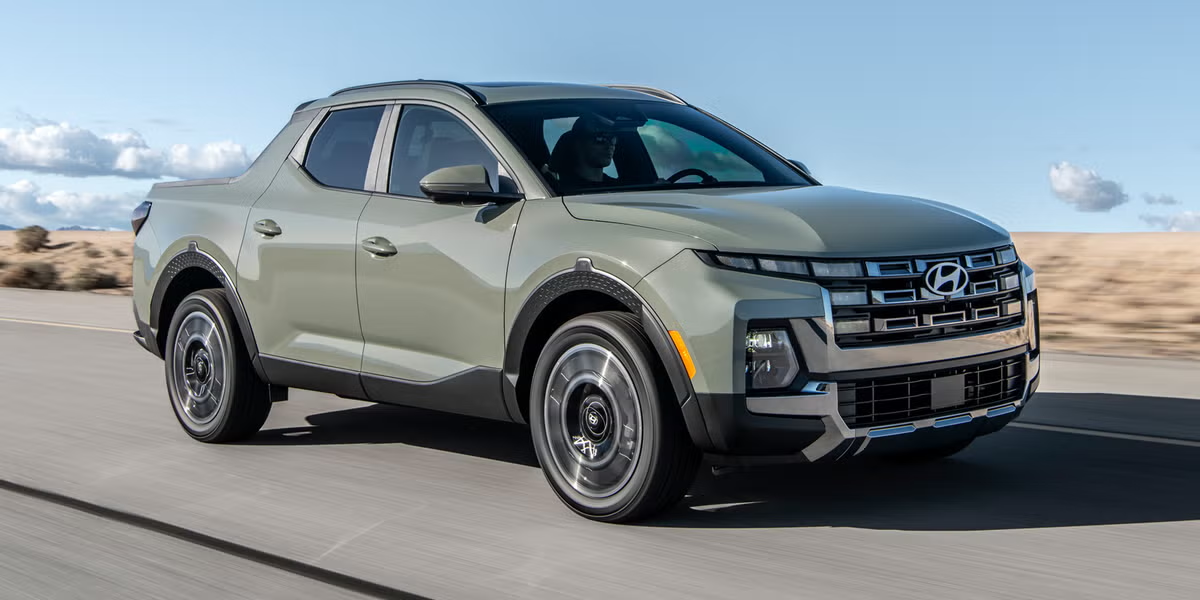
No one likes having excess inventory gathering up dust, and automakers aren’t any different. As a result, they must take action. One car that wasn’t selling well was the Santa Cruz, which most recently sold in a median of 87 days on the lot. Thus, as simple as that, Hyundai cancels the Santa Cruz.
As a reference, a new car sells after 26 days on the lot. That’s why the automaker took its only pickup to the chopping block.

“Drive Past Myths: Get the Real Deal on Car Buying!”
🚘 Uncover 13 Car Buying Misconceptions with Our FREE Newsletter!
Plus you will get our quick tips, expert advice, and myth-busting insights delivered straight to your inbox.
Subscribe now and make informed decisions without the detours.
“Experts Hate This! Learn the Car Buying Secrets They Don’t Want You to Know. Free Subscription!”
The fact that Hyundai cancels the Santa Cruz might surprise many. After all, when it entered the market in 2021, it was, at one point, the fastest-selling new car in the country, even beating out exclusive vehicles such as the Corvette.
Not only that, but the Santa Cruz had also earned positive reviews from several magazines. After all, it offered a complete package for those who weren’t that adventurous (more on that later). As Car And Driver said, it handled like a car, offered versatility, and came loaded with extras.
Here’s why Hyundai cancels the Santa Cruz.,
Hyundai Santa Cruz sales took a big hit, with 23,962 units sold in 2025. That’s 25% less than in 2024.
Meanwhile, the other compact pickup in the market, the Ford Maverick, has been the company’s best-seller and a good reason why the Blue Oval is growing.
So, what’s the difference? Well, if you read the reviews, as the one we shared from Car and Driver, you will have that many praise the Hyundai Santa Cruz for its handling, interior comfort and SUV-like capabilities.
None of these features highlight the “pickup” side of it. In fact, one of the more negative aspects of the Santa Cruz was the fact that the truck bed was too small to be practical.
While the Ford Maverick might not have the largest cargo bed, 3D-printed interior parts and a CVT, it has more cargo area. In the end, while the Santa Cruz might have been more at home at the beach, carrying surfboards, the reality is that even surfers want to be able to put their cargo in the car.
If Hyundai Cancels the Santa Cruz, Does This Mean No More Compact Trucks?
According to CarScoops, Hyundai hasn’t given up on pickups. In fact, we’ve discussed how the Korean automaker is pushing for a midsize truck to compete with the Toyota Tacoma and Ford Ranger. This is an even tougher area, but the company promises to have the equation finetuned, by offering something more rugged and traditional.
The company is finetuning the equation, because the Tasman, (from Kia, Hyundai’s sister company) hasn’t sold well in Australia, which is a good market for testing vehicles that could come to America.
What happened to Hyundai is certainly fascinating. The need is there for a pickup truck, but the market demands a simpler option. There are still many out there who have owned the simple pickups from the 80s, and they want to relive those days.
That’s why Toyota is rushing to produce its compact pickup truck, based on the RAV4 platform, for it to be released in 2027.
This makes us wonder why Chevy isn’t working on something for the market as well. The more, the better.
Hyundai Cancels The Santa Cruz Due To Low Sales
See the full article for details.