
Will We Have Affordable Cars in 2026?
Efforts indicate it could be possible, but affordable cars depend on too many factors that are hard to correct. However, we might be headed in the right direction.
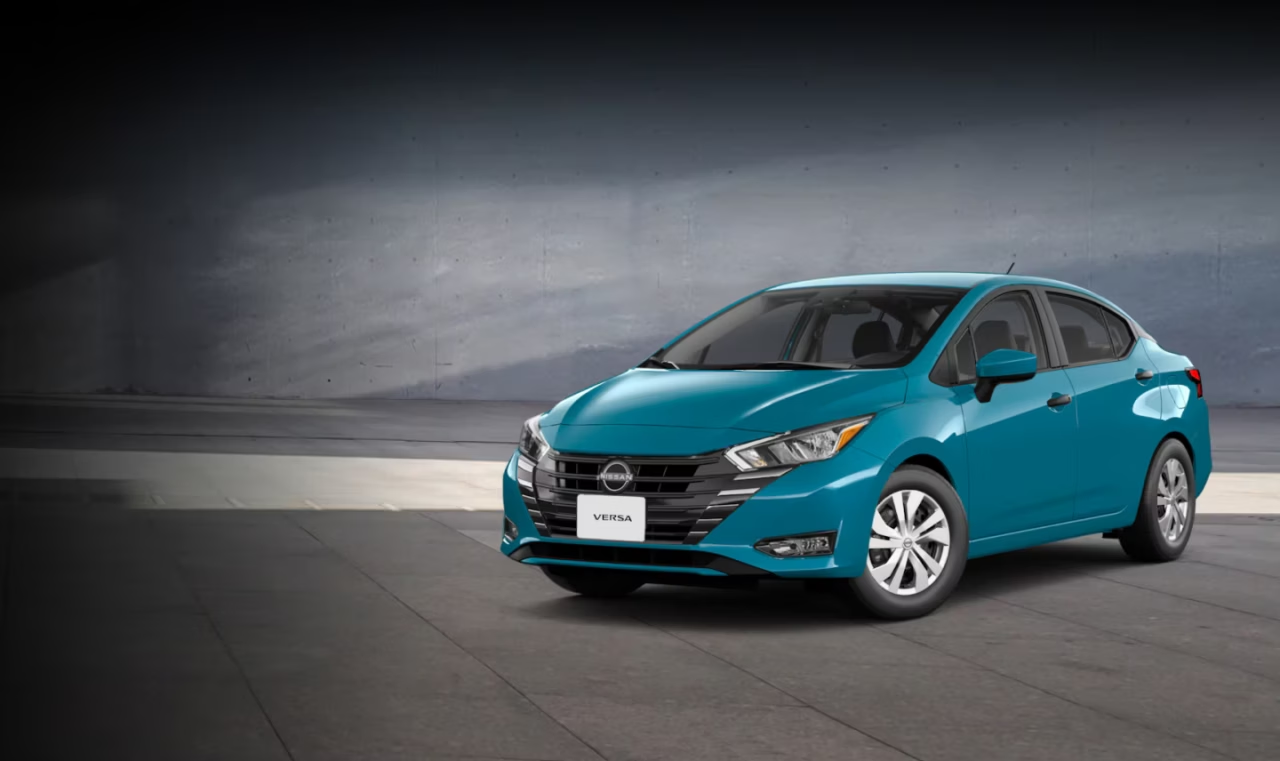
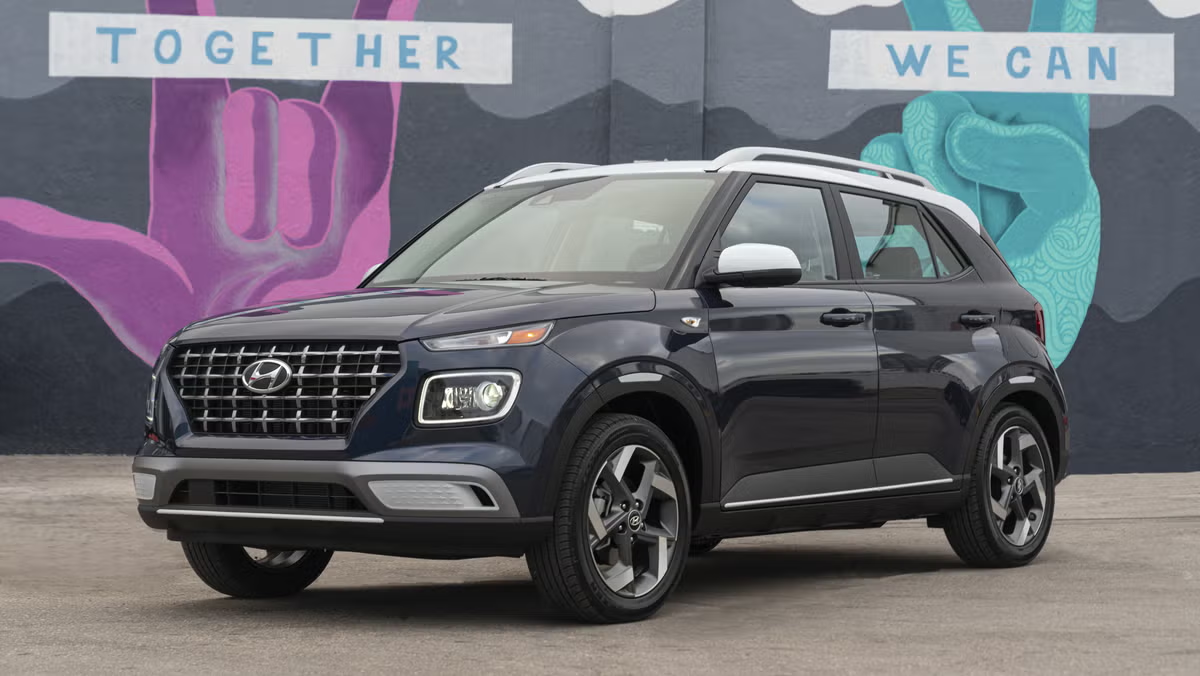
With the manual Nissan Versa no longer available, the sub-$20,000 car has disappeared. Now, the Hyundai Venue is one of the cheapest options out there, costing a scratch above $20,000, the reality is that affordable cars are progressively becoming harder to find.
This means that affordable cars are no longer a niche policy concern—they are quickly becoming one of the most important economic pressure points for American households. Over the past four years, vehicle prices have climbed faster than wages, financing costs have surged, and entry-level options have quietly disappeared from dealer lots.

“Drive Past Myths: Get the Real Deal on Car Buying!”
🚘 Uncover 13 Car Buying Misconceptions with Our FREE Newsletter!
Plus you will get our quick tips, expert advice, and myth-busting insights delivered straight to your inbox.
Subscribe now and make informed decisions without the detours.
“Experts Hate This! Learn the Car Buying Secrets They Don’t Want You to Know. Free Subscription!”
The result is a car market that increasingly excludes first-time buyers, working families, and rural consumers who rely on personal transportation not as a luxury, but as a necessity. We often hear of people lengthening their loans just to buy affordable cars, when it wasn’t like this. Here’s more on preventing scams on your loan.
That reality is now shaping federal messaging. Officials from the Donald Trump administration have put affordability at the center of their automotive agenda, framing access to lower-cost vehicles as both an economic and cultural priority. Their argument is simple: when cars become unaffordable, mobility becomes a privilege rather than a basic tool of participation in modern life.
Transportation Secretary visits to U.S. assembly plants underscore this point. At facilities like Ford Motor Company’s Ohio Assembly operations, the administration has emphasized domestic production as a pathway to stabilizing prices.
Building vehicles closer to where they are sold reduces logistical costs, limits exposure to supply chain shocks, and supports middle-class manufacturing jobs—all factors that can help contain sticker prices over time. While manufacturing location alone won’t solve affordability, it is increasingly seen as part of a broader cost-control strategy.
Affordable Cars Are Crucial For America
Why does this matter so much? Because cars sit at the intersection of nearly every other economic decision Americans make. Without reliable transportation, access to work narrows. Commutes become longer and more expensive. Job flexibility disappears. In many parts of the country—particularly suburban and rural regions—public transit simply isn’t a viable alternative. A $50,000 average transaction price doesn’t just strain household budgets; it reshapes where people can live, work, and raise families.
Affordability also affects market health. When entry-level vehicles vanish, automakers lose future loyal customers. Younger buyers delay purchases, rely longer on aging vehicles, or opt out entirely.
This weakens long-term demand and pushes manufacturers further upmarket, creating a feedback loop where prices continue rising because lower-cost segments no longer exist. From an industry perspective, that is not sustainable.
The administration’s “Freedom Means Affordable Cars” messaging taps into this concern. By highlighting regulatory costs, emissions mandates, and compliance burdens, officials argue that well-intentioned policies have inadvertently priced consumers out of the market. Whether one agrees with that diagnosis or not, the outcome is difficult to dispute: fewer sub-$30,000 new vehicles are available today than at any point in recent memory.
Affordable cars are not about cutting corners or rolling back safety. Modern vehicles are already safer and more durable than ever. The challenge is ensuring that innovation does not automatically translate into higher prices that only a shrinking slice of the population can afford. For many Americans, a car is not a status symbol—it is the key to economic independence.
As policymakers and automakers debate the future of the industry, affordability deserves to remain front and center. Without it, the U.S. risks building a transportation system that works brilliantly on paper, but poorly for the people who depend on it every day.
Will We Have Affordable Cars in 2026?
See the full article for details.