
What Is a Crossover Vehicle, and Should You Buy One?
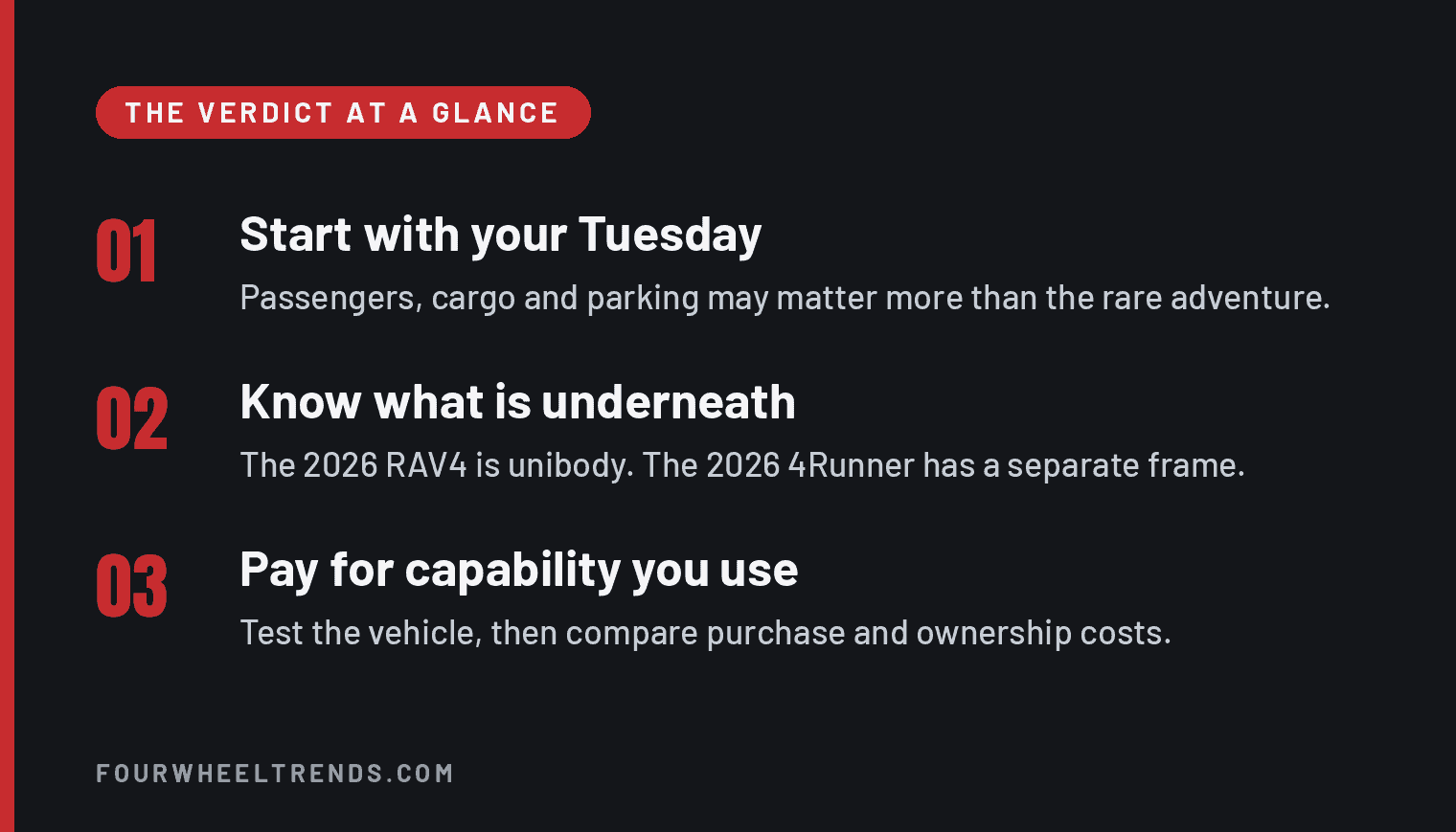
If a coworker asked me whether to buy a crossover or a “real SUV,” I would ask about their ordinary Tuesday before their dream vacation. Who rides along? What goes in the back? Is the vehicle ever going to pull a trailer or spend time on a rough trail? The answers usually make the choice much easier.
A crossover is generally the car-style member of the SUV family. It has a raised body and useful cargo space, with unibody construction underneath. For a lot of people whose driving happens on pavement, that is exactly the combination to shop first. The label itself won’t tell you whether a particular model fits your life.
What is a crossover, in plain English?
Think of the body and its structure working together as one piece. Toyota says the 2026 RAV4 uses a unibody platform. Its 2026 4Runner takes a different route with a separate, body-on-frame chassis.

They both get called SUVs. Their construction tells you more than the sign over the dealership row.
You do not need to become a chassis expert to use that distinction. It simply points you toward the right questions. How does the vehicle ride on your ordinary roads? What can its exact trim carry or tow? Are you paying for hardware you will actually use?
When would you choose the crossover?
If your week is commuting, picking people up, loading groceries, and taking road trips, I would start there. Sit in the back seat. Put your normal gear in the cargo area. Drive a stretch of rough pavement and park it in a tight spot.

Those five minutes can settle more than an hour spent comparing cargo-volume numbers. If you want a starting list, our guide to compact crossovers for real life covers specific models.
Available all-wheel drive may be useful where you live, but check the exact model and tires. If you are comparing fuel costs, use the EPA label for the engine and drivetrain you would buy. A category name cannot promise a particular mileage result.
When would a body-on-frame SUV earn its place?
Maybe you regularly tow something a crossover cannot handle within its ratings. Maybe the trails you actually drive call for specific off-road equipment. That is when I would look hard at a 4Runner or another body-on-frame SUV and check the exact trim’s capabilities.
Be honest about how often those needs come up. If the demanding trip happens once every few years, price the everyday vehicle you prefer and the occasional rental too. If towing or rough trails are part of your normal life, the extra capability may be money well spent.
Which one would I tell a friend to buy?
I’d make a short list of jobs the vehicle must do, then drive a crossover that can do them. If it falls short on a real requirement, test the body-on-frame alternative. Compare the full cost of owning each one, including purchase price, fuel, insurance, maintenance, and what you may get back when you sell.

Our SUV retained-value guide can help with that last piece. It shows why a strong resale percentage and a smaller dollar loss are not the same thing.
The right vehicle is the one that makes your ordinary days easier and your hardest days possible. This article offers general educational information. Personal financial advice would require knowing your situation, and I do not know it.
Sources
- Toyota, 2026 RAV4 announcement with its TNGA-K unibody platform, checked November 9, 2026.
- Toyota, 2026 4Runner features with its TNGA-F body-on-frame chassis, checked November 9, 2026.