8 Proven Ways To Increase Towing Capacity
Certain aspects are considered during the manufacturing of any vehicle, one of them being the vehicle’s maximum towing capacity.
If you’ve reached the limits of your truck’s current towing capacity you be wondering if it’s possible for you to save the truck and increase towing capacity to better meet your needs.
How To Increase Towing Capacity
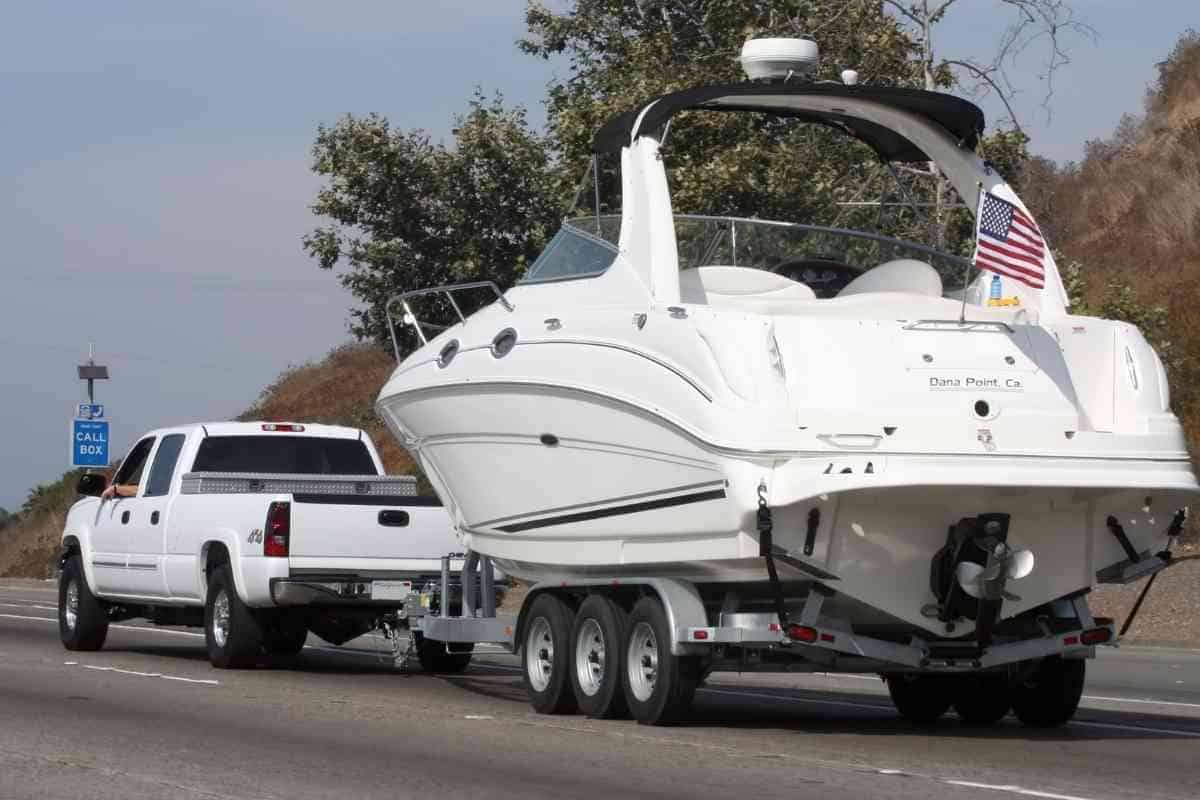
If you want to increase towing capacity, then you’re looking at increasing your vehicle’s all-around performance. Simply upgrading your hitch may increase your towing capacity enough for most needs.
For a big upgrade, if you’re looking to increase towing capacity considerably, you have a ton of options. These include reprogramming your vehicle or upgrading your radiator, suspension, braking system, axles, or exhaust.
While these will definitely change your truck or SUV’s performance, they can void your warranty or affect other components.
If you’re buying a new vehicle, chances are that you can opt for a tow package. This already includes the features to increase towing capacity.
What Is Towing Capacity?
Towing capacity is defined as the total weight amount a vehicle can tow when it is pulling a trailer. Manufacturers build vehicles based on the Gross Vehicle Weight Rating (GVWR), a rating that gives a value to the total amount of a vehicle’s combined maximum weight and the load the vehicle can tow.
This somewhat makes it difficult to alter the rating since vehicles are made with already set towing capacities. For some vehicles, increasing the towing capacity can only be done by re-engineering the whole vehicle, while for some, it’s a bit more straightforward.
To obtain the Gross Vehicle Weight Rating (GVWR), the following metrics are obtained:
- Base Curb Weight is the empty vehicle’s weight without any fuel or cargo, and
- Cargo Weight is the total weight of everything the vehicle carries, i.e., loads inside, passengers, and anything attached outside.
The allowable load is the extra weight a vehicle carries and is obtained from detracting the cargo weight from the Gross Vehicle Weight Rating.
Critical features that affect towing capacity include your engine, your drive configuration, the transmission and the bed size. Understanding how these affect your vehicle is critical in knowing how you can increase towing capacity safely.
How engines affect towing capacity
The first aspect to discuss is engine, and its impact on towing capacity is logical. The more powerful the engine, the more it will tow. However, there are other aspects to consider.
Turbocharged engines can tow generally higher loads. The downside is that they usually need more maintenance, and repairs can be more expensive.
The same applies to diesel engines. These have extraordinary torque figures. However, their initial cost is higher, and can be more expensive to maintain. The right engine size for towing is critical.
How RWD and 4WD configurations affect towing capacity
One of the most important factors when discussing towing capacity is the drivetrain configuration. This is a fancy term for whether your truck is RWD or 4WD.
Although it sounds counterintuitive, most 4WD tow less than their RWD counterparts. The reason for this is that 4WD vehicles are heavier. The two-speen transfer case and added differential in the front can add several hundred pounds.
This means that 4WD are usually heavier. On the other hand, a RWD truck carries less weight.
Does this mean that you should remove the 4WD system to increase towing capacity? You could, but it’s too expensive.
How the transmission affects towing capacity
Another critical factor in a truck’s performance is the transmission. Even though manual trucks are already disappearing, some manual versions could tow less than their automatic counterparts.
This is because the torque converter can help with heavier loads. At the same time, if the vehicle offers different transmissions (again, some that happens less and less), you can opt for one rated for hard work.
How the bed size affects towing capacity
Imagine you have two metal bars, one of them is short, and one of them is long. Each of them have a hook attached to the end.
You’re trying to hook a heavy load and pull it by hand. While it’s heavier, chances are that, once you hook it, it will be easier to pull.
The same applies to long and short beds. Some longer beds can offer higher towing capacities. The longer wheelbase often offers better weight distribution when pulling a heavy load.
While all these factors affect towing capacities, the best way to undersand how your truck behaves is by checking out what the manufacturer says.
Steps To Increase Towing Capacity
To increase towing capacity, one has to modify a vehicle to allow for more effective weight distribution. The only hiccup is determining the right modifications to make and not exceeding the manufacturer’s suggested weight, as this would damage several different parts of the vehicle.
Determining the current weight your vehicle can tow and the amount you want it to tow is the first thing to do. This difference is important to obtain as it will guide you as you make modifications to your vehicle.
As indicated earlier, exceeding what your manufacturer recommends is dangerous; hence weight differences that exceed one thousand pounds are way too risky.
Modifications come in handy if you’re looking to increase towing capacity by a much smaller amount. These upgrades are best purchased to match your existing towing limits.
By the way, one of the best, and simplest ways, to increase towing capacity, even by a smaller margin is to shed weight. Don’t carry a lot of unnecessary weight (which will also help your fuel economy).
Doing so won’t dramatically increase performance, but it helps.
Enhancing Overall Performance
For your vehicle to pull a larger load, you’ll have to upgrade its overall performance. This will mainly involve adding or replacing existing parts with better ones.
For a start, upgrade the exhaust system with new air filters, which will add to the vehicle’s towing power.
You could also add dual exhausts, which make the engine would breathe much better, thus increasing the performance. This boosts the overall engine capacity, thereby helping it to tow more load.
Most of these modifications can increase your engine’s power by 2% to 10% at most. The improved engine directly helps to increase towing capacity.
Find A Vehicle Programmer
All modern vehicles are equipped with an Electronic Control Unit (ECU) that monitors and controls all electronic features in a car. It is a built-in computer that the vehicle depends on in the management of its systems.
With the ECU being a computer, it is composed of programmable internal computer chips used to operate the engine using input sensors with the combination of output components to control all the engine functions.
A vehicle programmer can adjust various onboard computer settings to get maximum horsepower and also maximum torque. The programmer may also tweak settings like fuel efficiency, air intake, and gear shifting settings to get the wanted towing capacity.
Increase The Radiator Size
A car’s radiator is a heat exchanger that is the central component of a vehicle’s cooling system. Its main function is to control and regulate the engine temperature and prevent the engine from overheating. This ensures the proper functioning of the engine, thereby preventing a breakdown.
With increased vehicle weight, the components generate more heat; thus, installing a much bigger radiator is appropriate to increase the cooling system efficiency. Most tow-capable vehicles feature two radiators, one for the engine and one for the transmission, to provide a faster cooling process. A larger radiator is a must if you want to a heavy payload.
Upgrading The Suspension
The suspension system is the part of a vehicle that connects the vehicle to the wheels and allows motion to occur between the two. It is basically a system of parts that support the entire vehicle as it moves.
To boost the towing capacity of a truck, a suitable suspension needs to be installed. This might be a costly upgrade but is crucial since an unsuitable suspension may lead to adverse safety matters. Some upgrades don’t increase towing capacity, but make it safer to tow.
This is the case of what airbags do for towing. Installing them can make your vehicle much more stable, but this feature won’t increase towing capacity.
An upgraded suspension will help increase the towing capabilities by improving the weight distribution on all the axles.
Upgrading the suspension will also bring more weight to the vehicle’s front side, which improves the absorption of road bumps, thus enabling a smoother ride and good steering control.
Does Towing With A Lifted Truck Affect Performance?
One of the most common questions you can get when discussing towing performance is whether a lifted truck affects how much you can actually tow. The short answer is that, yes, it affects performance directly. However, it might not be how you expect.
Towing with a lifted truck is not advisable. In fact, a lifted truck might even have less towing capacity.
There are several factors affecting towing performance with a lifted truck. Firstly, the increased height can make the vehicle much more unstable.
This is critical for safety, as a modified truck will behave differently.
At the same time, a raised suspension can sag. Because they are made to lift the truck, instead of lowering it, a raised suspension kit creates the opposite effect to towing. The vehicle then drops and can behave strangely.

Replace Braking System
Vehicles have brakes on all of the wheels operated by a hydraulics system. The system allows for a vehicle to slow down or stop more conveniently and reliably.
The braking of a vehicle is a crucial part of safety; hence braking responses from the brake pedal to the actual braking must be very quick.
An upgraded braking system will help with managing the extra strain that is attributed to the added weight. When you haul heavy loads, it generally takes more time to bring the vehicle to a stop.
An upgrade to the brake pads and rotors with high-performance and quality parts is needed if you are hauling heavier loads.
Replace Axles
The axle is the central shaft for rotating the wheels. This is achieved by transferring power from the vehicle’s transmission to the wheels.
The axle also supports the vehicle’s weight. Carrying extra weight may cause damage to the axles.
The existing axles need to be replaced with heavy-duty ones to prevent any further damage to carry a heavier load. Replacing the vehicle’s old differential should also be done to meet the new gross axle weight rating and specifications.
One way you can actually improve your truck’s towing capacity is by installing the axles that come from the factory in the towing package. They usually have a better axle ratio, which means that the wheels turn less, but offer more torque.
Upgrade The Hitch
By definition, a tow hitch is a device attached to the chassis of a tow vehicle to make towing possible. The quality of the trailer hitch greatly influences the ability to tow bolted to your vehicle.
Hitches are rated based on a specific weight amount; thus, increasing your tow weight requires a change in your vehicle’s hitch so that it doesn’t break.
The addition of a high-quality hitch will allow for safer transportation of heavier loads. It’s an excellent way of increasing your vehicle’s towing performance.
Upgrading the intake and exhaust
The intake system is a combination of several components that allow the engine to breathe. The exhaust system, on the other hand, allows it to exhale.
Upgrading the intake and exhaust system could improve the engine’s horsepower and torque.
One upgrade would be installing dual exhausts, which would allow the engine to breathe better, thereby increasing its performance. Boosting the engine performance allows for heavier loads to be towed. It might be more expensive, but it’s worth it if you want to tow the most.
The Bottom Line On How To Increase Towing Capacity
These are the methods to use to increase towing capacity of your vehicle. However, it’s important to keep in mind that, yes, upgrades can increase the tow limit on your truck, but it’s best to purchase a vehicle with your desired tow capacity to avoid the hassle.
There are potential risks involved with any major modifications to your pickup truck, so it’s important to plan this process carefully to ensure the proper results. The amount of towing capacity increased will greatly be influenced by the type of vehicle in question and the upgrades’ availability.
Some might want to pull a little extra load, which means they will be fine. Not going past the recommended tow weight is always the safest way. The modifications in this article will help you to push your towing capacity to the max.
How can I increase my towing capacity?
Install a transmission cooler, upgrade to a weight distribution hitch, add airbag helper springs, ensure proper tire inflation, and use the correct axle ratio. Note: these improve towing performance but do not officially change your manufacturer towing rating.
How can I increase my towing capacity?
Install a transmission cooler, upgrade to a weight distribution hitch, add airbag helper springs, ensure proper tire inflation, and use the correct axle ratio. Note: these improve towing performance but do not officially change your manufacturer towing rating.
I’m looking at the towing capacities of the 2023 Chevy Colorado (7,700 lbs.) vs the 2023 Chevy Silverado (9,000 lbs.) with the same drive train (4 cylinder 2.7L TurboMax, 8L90 transmission, 3.42 final drive). Why is there a difference in towing capabilities? Can you modify the 2023 Chevy Colorado to tow 9,000 lbs. like the Silverado? If so, what needs to be done?
As I understand it, the difference in towing capabilities between the Colorado and Silverado is mainly due to the Silverado’s better cooling abilities. It’s important to note that the Colorado’s 7,700 lbs. towing capacity is still impressive for its class, and it should be sufficient for most users’ needs. If you require a higher towing capacity, the Silverado might be a better choice from the factory.