
Can I Use Octane Booster Instead of Premium Gas? Read This To Avoid Damaging Your Engine!
Most octane boosters can’t fully replace premium gas because they don’t raise octane levels enough to match what your engine needs, and using them regularly costs more than just filling up with the right fuel. Understanding how these products actually work and when they might be acceptable helps you avoid expensive mistakes or engine damage.
How Octane Boosters Work Compared to Premium Gas
Octane boosters use chemical additives to raise your fuel’s resistance to engine knock and pre-ignition. The problem is how octane booster ratings work.
When a bottle says it adds “10 points,” that sounds impressive until you learn that one point equals just one-tenth of an octane number. A 10-point boost only raises 87 octane regular gas to 87.1 octane. You’d need a 60-point booster to turn regular gas into 93 octane premium.
Most over-the-counter octane boosters only provide 5 to 30 points per bottle. Even high-quality products that boost 30 points would require two full bottles per tank to bridge the gap between regular and premium fuel.
Premium gas delivers a consistent octane rating of 91 to 93 right from the pump. You don’t need to measure, pour, or calculate anything. The octane rating stays stable throughout your tank, which matters for preventing engine knocking and pinging noises during hard acceleration or towing.
When It’s Safe to Substitute
You can safely use octane booster in limited emergency situations when premium gas isn’t available. If you’re stuck in a remote area with only regular gas and your high-performance engine requires premium fuel, adding booster beats risking severe engine knock.
For daily driving in vehicles that simply recommend premium but don’t require it, regular gas alone usually works fine. Your engine’s computer will adjust timing to prevent damage, though you might notice slightly less power.
Racing applications actually benefit from octane boosters since premium fuel doesn’t get higher than 93 octane at most pumps. Track drivers often add booster to premium gas to reach 100+ octane for extreme performance needs.
Never use octane booster as your regular strategy to save money. The math doesn’t work in your favor, and some boosters contain additives like ferrocene that damage catalytic converters and spark plugs over time.
Manufacturer Requirements and Warranty Risks
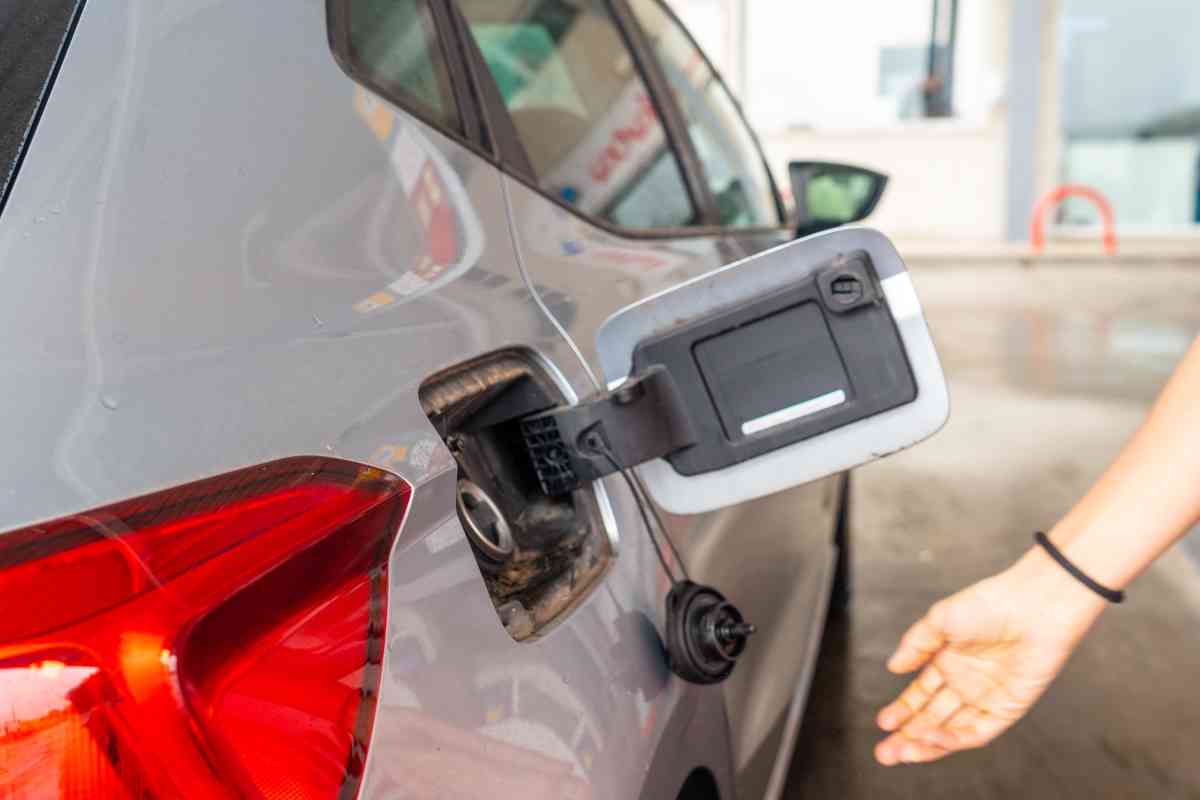
Your owner’s manual uses specific language that matters. “Requires premium fuel” means your engine was designed for high-octane fuel and may suffer damage without it. “Recommends premium fuel” means you’ll get better performance with it, but regular won’t harm anything.
Using octane booster instead of the recommended fuel grade creates warranty complications. If your engine develops problems related to fuel quality or engine knock, your dealership might deny coverage when they discover you’ve been using additives instead of following manufacturer requirements.
Modern high-performance engines generate extreme compression pressures that demand consistent high-octane fuel. Turbocharged and supercharged engines are especially sensitive because forced induction increases combustion pressure even further.
Inconsistent octane levels from DIY mixing can cause knock sensors to constantly adjust timing. This reduces engine performance and fuel economy, defeating the whole purpose of trying to save money with boosters.
Real-World Scenarios and Emergency Use
Keep one bottle of quality octane booster in your vehicle for genuine emergencies. If you’re on a road trip and the only gas station for 50 miles lacks premium, you have a backup option that beats limping along on straight regular gas.
For occasional use in engines that require premium, one bottle won’t destroy your warranty or engine. Just don’t make it a habit or convince yourself you’ve found some money-saving hack.
The cost comparison kills any fantasy about saving money. Premium gas costs about 60 cents more per gallon than regular. For a 20-gallon fill-up, that’s $12 extra. Quality octane boosters that actually work cost $10 to $27 per bottle, and you need multiple bottles to raise octane sufficiently.
Your best emergency strategy is planning ahead. Use gas station apps to locate premium fuel along your route before you’re running on fumes in the middle of nowhere.
What Are Octane Boosters And How Do They Work?
Octane boosters are fuel additives that bump up your gas’s resistance to engine knock by raising its octane rating. They use different chemical compounds to change how your fuel burns, and the actual boost you get depends on which type you buy and how much you use.
Chemical Types and Additives
An octane booster is basically a bottle of concentrated chemicals designed to make your fuel harder to ignite at the wrong time. Most products on the market use one of several anti-knock agents to get the job done.
MMT (methylcyclopentadienyl manganese tricarbonyl) is one of the most common ingredients you’ll find. It’s a manganese-based compound that raises octane levels pretty effectively. Products like Boostane and Boostane Professional often rely on aromatic compounds and advanced formulas to deliver higher performance gains.
Some older or racing-focused additives used to contain compounds similar to what was in leaded gas, which worked great but caused serious environmental and health problems. That’s why you won’t see those in consumer products anymore.
The chemical makeup matters because different additives have different strengths and side effects. Some work better than others, and some can actually damage your engine over time if you’re not careful.
How Much Octane Boosters Actually Raise Ratings
This is where things get real. Most octane boosters measure their effectiveness in points, and one point equals one-tenth of an octane number. So if you pour a bottle into your tank and it claims a 3-point boost, you’re taking 87 octane gas up to 87.3 octane.
Most octane boosters only boost by less than one point per bottle. To turn regular 87 octane gas into 93 octane premium, you’d need multiple bottles, which gets expensive fast.
High-end products might deliver 8 to 10 points per bottle, but even then you’re looking at needing several bottles to match what you get from the premium pump. Some racing formulas claim even higher numbers, but those are designed for race fuel, not pump gas.
The math rarely works in your favor cost-wise when you’re trying to replace premium fuel with regular gas plus booster.
Common Ingredients and What They Do
Different octane enhancers use different chemicals, and knowing what’s in your bottle matters for your engine’s health.
Aromatics like toluene and xylene are hydrocarbon-based compounds that naturally have high octane ratings. They’re common in commercial boosters and generally safe for modern engines.
Iron pentacarbonyl is another additive you might see, but this one comes with a warning. Iron-based compounds can damage spark plugs and catalytic converters because they leave behind iron oxide deposits.
Some racing products use exotic blends that work great for competition but aren’t street-legal or safe for daily drivers. These often contain higher concentrations of banned substances or chemicals that will trash your emissions system.
The best fuel additives use a blend that increases octane ratings without leaving harmful residues. Always check the ingredient list and make sure it’s safe for your specific engine before you dump it in your tank.
Octane Booster Vs Premium Gas: Pros And Cons
Both octane boosters and premium gas aim to raise your fuel’s octane rating, but they work differently and come with their own trade-offs. The real question is whether adding a bottle to your tank makes more sense than just pulling up to the premium pump.
Engine Performance and Knocking Prevention
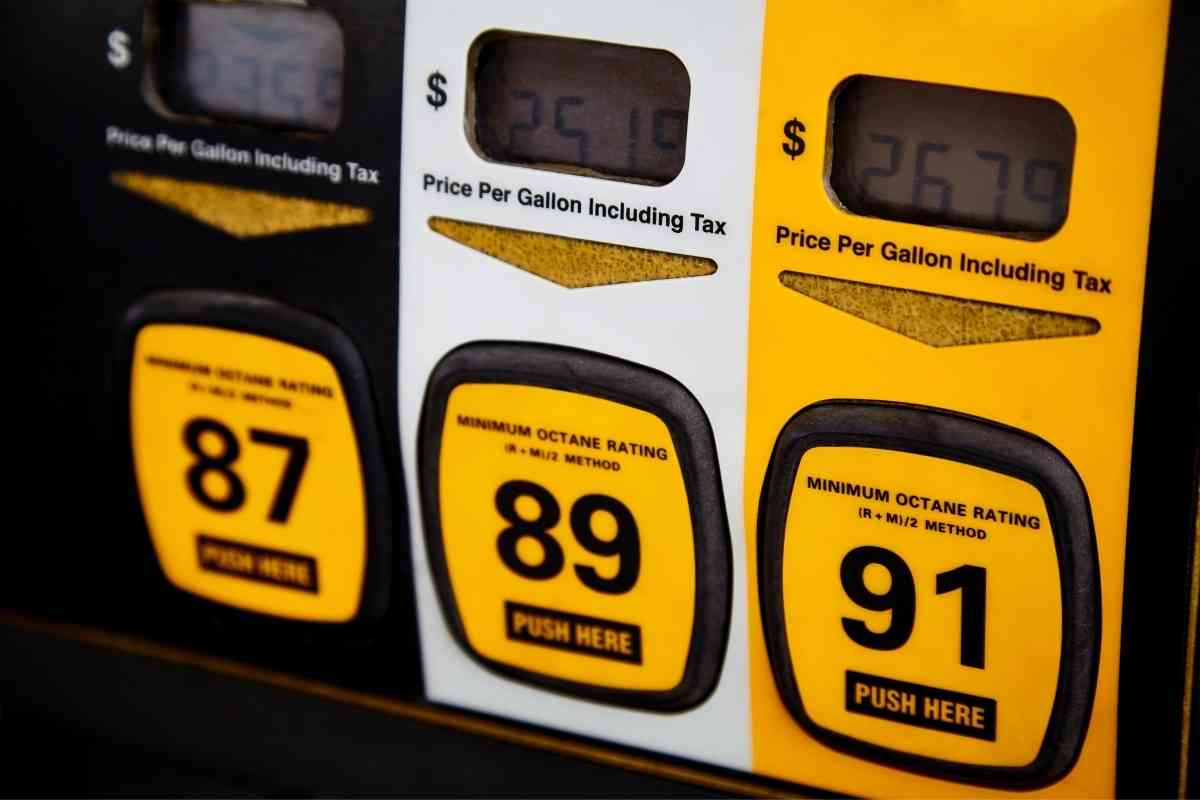
Premium gas typically sits at 91 octane or 93 octane depending on where you live. That higher rating means your fuel resists “knocking” better, which is when fuel ignites at the wrong time in your combustion chamber.
Modern engines designed for premium gas can technically run on regular gas. But you’ll notice a difference. Your car’s computer will retard the spark timing to prevent knock, which means you lose power and responsiveness.
Octane boosters work differently. They use anti-knock agents to raise the combustion point of your fuel. Most boosters only increase octane by less than one point per bottle, which means 87 octane gas becomes 87.1 octane gas with one bottle.
You’d need multiple bottles to get regular gas anywhere close to premium levels. Even a decent three-point booster only adds 0.3 to your octane rating. That means two full bottles just to turn regular into something approaching premium.
The performance benefits are the same once you hit the right octane level. Your engine doesn’t care how it got the high-octane fuel it needs.
Potential Risks and Downsides
Not all octane boosters are created equal. Some use ingredients that can actually hurt your engine over time. Ferrocene and iron pentacarbonyl are two culprits that produce iron oxide, which damages spark plugs and catalytic converters.
Most octane boosters on the market are safe for your engine. But you need to do your homework before dumping anything into your tank. Read the label and check reviews from other users.
Premium gas doesn’t carry these risks. It’s formulated to work with your engine right out of the pump. You’re not adding unknown chemicals or hoping the booster plays nice with your fuel system.
There’s also the hassle factor. Using boosters means buying bottles, storing them, and adding them every single time you fill up. Miss a tank and you’re back to square one with potential knocking issues.
Cost Comparison and Value
Here’s where the math gets brutal for octane boosters. Premium gas costs about 60 cents more per gallon than regular gas. For a 24-gallon tank, that’s $14.40 extra.
A quality octane booster that raises octane by three points costs around $14 per bottle. You need two bottles to raise 87 octane to 91 octane, which means you’re paying $28. That’s double the cost of just buying premium.
Cheaper boosters make the problem worse. An eight-point booster (0.8 octane increase) costs about $5 per bottle. You’d need five bottles to go from 87 to 91, which is $25 per tank. Still more expensive than premium.
Top tier fuel also includes detergents and additives that keep your engine clean. You don’t get those benefits from a basic octane booster mixed with cheap gas.
The only way boosters make financial sense is if you find them deeply discounted or use them occasionally for a small boost rather than as a complete replacement.
High-Performance Engines and Race Fuel Needs
This is where octane boosters actually shine. Regular premium gas tops out at 93 octane in most places. Race fuel runs 100 octane or higher, but it’s expensive and not available at every pump.
High-performance racers use octane boosters to push 93 octane premium up to 100 octane or beyond. This gives them the knock resistance they need for heavily modified engines without tracking down specialty fuel.
If you’re running a built engine with high compression, boosters can help you fine-tune your octane level. You might need 95 or 97 octane, which you can’t buy at a regular station. Adding a booster to 93 octane premium gets you there.
For stock engines that just need premium, boosters don’t offer any real advantage. Your fuel economy won’t improve and you won’t make more power. You’re just spending more money to solve a problem that premium gas already handles.
Choosing The Right Solution For Your Engine
Your engine’s fuel needs aren’t a guessing game, and the choice between premium gas and octane booster comes down to what your specific vehicle actually requires. Let’s break down how to figure out what your engine needs and when each option makes sense.
Understanding Your Engine’s Fuel Requirements
Pop open your owner’s manual or check the fuel door sticker. That’s where the manufacturer tells you exactly what your engine needs to run properly.
If it says “premium fuel required,” that’s not a suggestion. Your engine was designed with a higher compression ratio that needs the knock resistance of 91-93 octane fuel. Using lower octane fuel can lead to engine knock, which is basically your fuel detonating at the wrong time and causing damage.
Here’s the thing though. Some cars say “premium fuel recommended” instead of required. That’s different. These engines can run on regular gas without damage, but you might lose some horsepower or fuel efficiency.
The recommended fuel rating exists for a reason. Your engine’s computer can adjust timing to compensate for lower octane, but it’s doing that by pulling back performance to prevent knock. You’re basically paying for a high-performance engine and then handicapping it to save a few bucks at the pump.
When To Use An Octane Booster
Octane boosters have their place, but it’s probably not what you think.
They’re genuinely useful for:
- Racing applications where you need octane above 93
- Vintage cars with engines that pre-date modern fuel formulations
- Emergency situations when premium isn’t available
Most octane boosters only increase fuel ratings by less than one point per bottle, which means you’d need multiple bottles to turn 87 octane into 91. That gets expensive fast and isn’t practical for daily driving.
If you’re serious about racing or building a high-compression engine, quality octane boosters can push premium fuel even higher. But for your daily driver that needs premium? Just buy the premium gas. It’s cheaper and more reliable than trying to boost regular fuel.
Best Practices and Smart Use
Don’t overthink this. If your car requires premium, fill it with premium every single time.
Your wallet might hurt a bit more at the pump, but engines are more damaged by knocking from low octane than they are helped by boosters. The cost of repairing engine damage from sustained knock will make premium gas look like pocket change.
Follow these guidelines:
- Never use octane booster as a permanent replacement for premium gas
- Avoid boosters with ferrocene or iron pentacarbonyl, which can damage catalytic converters and spark plugs
- If you accidentally fill with regular, add a high-quality booster and drive gently until you can refill with premium
The math is simple. Premium gas costs about 60 cents more per gallon. For a 24-gallon fill-up, that’s $14 extra. Quality octane boosters that actually work cost $14-27 per bottle, and you’d need at least two to get the octane bump you need. You’re spending more money for a worse solution.
Save the octane booster for the track or for genuine emergencies. For everything else, just use what your engine was designed to run on.
Frequently Asked Questions
Octane boosters raise a lot of questions among drivers trying to save money or squeeze more performance from their rides. Most people want to know if these additives actually work, what they cost compared to premium fuel, and whether they might harm their engines over time.
What are the actual improvements in performance when using octane boosters?
Most octane boosters give you minimal performance gains unless you’re running a high-performance or racing engine. The reality is that most octane boosters only increase octane ratings by less than one point per bottle, which translates to about 0.1 octane.
If your car runs fine on regular gas, adding an octane booster won’t suddenly give it more horsepower or better acceleration. Your engine’s computer is programmed to work with a specific octane level, and boosting beyond that doesn’t unlock hidden power.
The main benefit you’ll notice is reduced engine knock if your car is pinging on lower octane fuel. But that’s not really a performance improvement as much as it is bringing your fuel up to what your engine actually needs.
Is there a risk of engine damage from regularly using octane boosters?
Yes, some octane boosters can damage your engine over time. Certain additives contain ingredients like ferrocene and iron pentacarbonyl that can deteriorate spark plugs and catalytic converters because they produce iron oxide as a byproduct.
Your catalytic converter is an expensive part to replace, often costing over a thousand dollars. Damaging it to save a few cents per gallon on gas is a terrible trade-off.
Not all octane boosters are dangerous, but you need to read the ingredient list carefully. Stick with reputable brands that clearly list what’s in the bottle and avoid anything with metallic additives if you want to protect your emissions system.
How do you properly calculate the correct amount of octane booster to mix with lower octane fuel?
Calculating the right amount of octane booster requires knowing how many points the product raises octane per bottle and your tank size. One point equals 0.1 octane, so a booster rated at 10 points will raise 87 octane gas to 88 octane in a full tank.
If you need to go from 87 to 93 octane, that’s a 6-point jump. With a booster that provides 3 points per bottle, you’d need two full bottles for one tank of gas.
Check the product label for the tank size it’s rated for. Some boosters are designed for 12-gallon tanks while others work with 15 or 20 gallons. If your tank is larger than what’s listed, you’ll need proportionally more booster to achieve the advertised increase.
Can combining octane booster with fuel injector cleaner give my engine extra pep?
Combining these products won’t hurt anything, but they serve different purposes. Fuel injector cleaner removes carbon deposits and keeps your fuel system clean, while octane booster raises the combustion temperature of your fuel.
Clean injectors can improve performance by ensuring proper fuel delivery and spray patterns. But that’s separate from octane levels. You might notice smoother running and slightly better fuel economy from cleaner injectors, especially if your car has high mileage.
Don’t expect miracles from mixing additives together. If your car feels sluggish, it’s better to diagnose the actual problem rather than throwing bottles of chemicals at it and hoping something works.
Is it more cost-effective to use octane boosters rather than filling up with premium gas?
No, octane boosters cost more than premium gas in almost every scenario. Premium fuel costs about 60 cents more per gallon than regular, which adds up to roughly $14 extra for a 24-gallon fill-up.
To raise regular gas from 87 to 93 octane with boosters, you’d need at least two bottles of a quality product at $14 each, totaling $28. If you use a cheaper booster that only adds 0.8 octane per bottle, you’d need five bottles at $5 each, costing $25 total.
The math gets worse with lower-quality boosters that provide even smaller octane increases. You’re always better off just buying premium at the pump if your car requires it.
Are there specific brands of octane boosters that are more reliable or beneficial for my vehicle?
Higher-quality octane boosters typically provide 3 points or more per bottle and use safer chemical formulations. Look for products that clearly state they’re safe for catalytic converters and oxygen sensors.
Avoid any octane booster that contains metallic additives or doesn’t clearly list its ingredients. The cheapest options usually provide the smallest octane increase and may contain questionable chemicals.
For occasional use, brands that focus on cleaning benefits along with octane boost can be helpful. But remember that octane boosters work best for racing applications where you’re trying to push premium fuel above 93 octane, not as a replacement for buying the right fuel grade in the first place.
Can I Use Octane Booster Instead of Premium Gas? R
See the full article for detailed information.
Wow, what car has a 24 gallon tank? That’s close to double most vehicles I’ve driven.
Also, how much of this was written by AI? Some of those sentences read like AI fluff in the way things are restated repeatedly and can probably be removed.