Biggest Tires on a Stock Ford F-150: What Owners Report
I recently bought a 2025 Ford F-150. The factory tires are brand new, and I’m already wondering how it would look with a bigger, more aggressive set. If you’re thinking about the same upgrade, I understand the temptation.
I’ve also learned that I can love how a tire looks and dislike driving on it. That happened with the Toyo Open Country AT3s I put on my Sequoia. The Maxxis Razr ATs on our Lexus surprised me with how much I liked them. So as I think about tires for the F-150, I’m weighing the look against the hours I’ll spend behind the wheel.
I’ve gone through the F-150 forum discussions and pulled together the setups that help answer the question you’re probably asking, which is how big you can go without lifting the truck. I’ll share those examples, along with the tire brands I’d consider from my own experience.
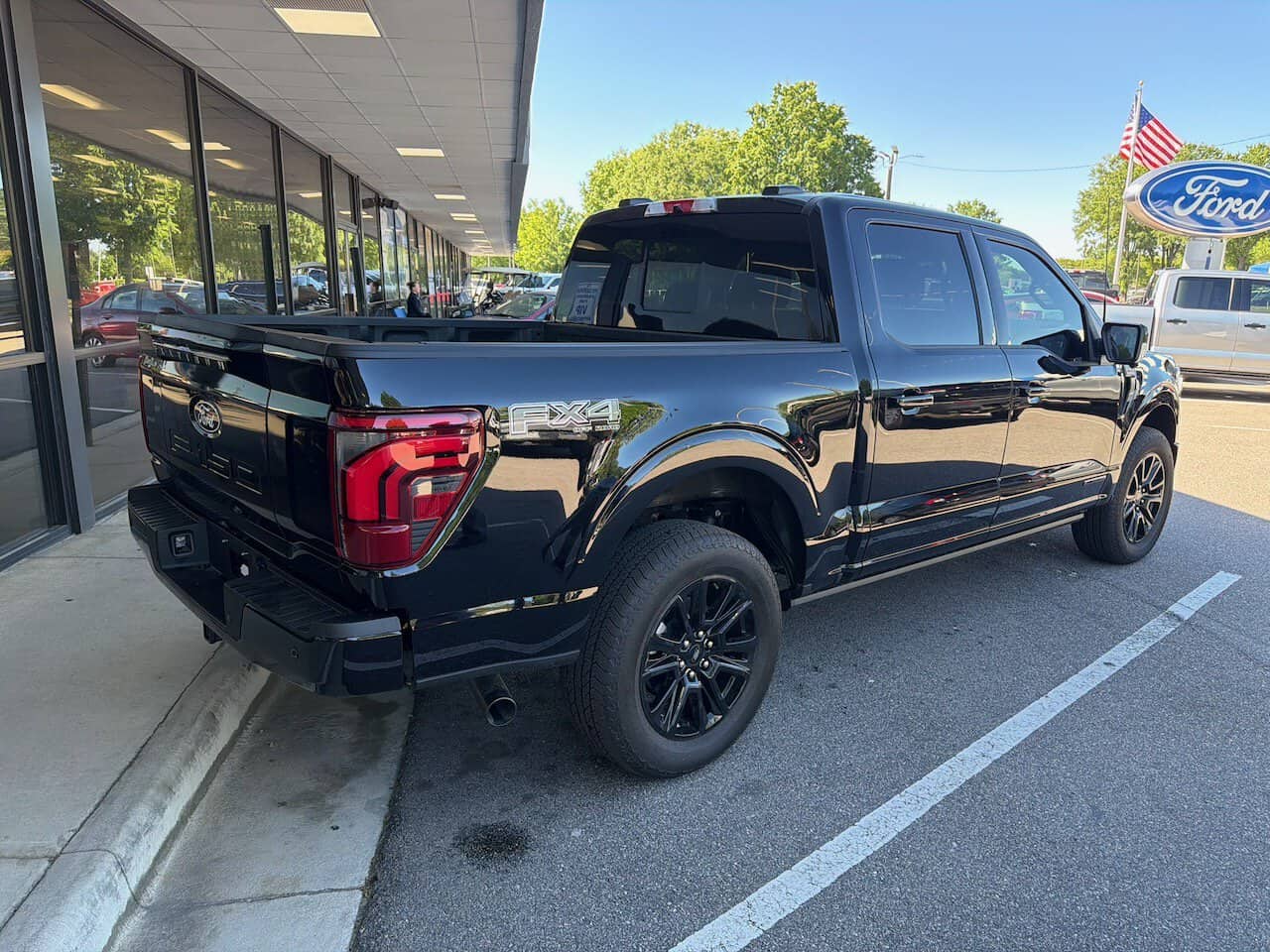
On an ordinary F-150 with factory wheels and suspension, I’d start looking around 33-34 inches. Some owners have fitted 285/65R20 tires, roughly 34.6 inches tall, without a lift or level. Whether you can do the same comes down to your truck, its wheels, and the exact tire.
If you have factory 20-inch wheels, 275/65R20 is the size I’d discuss with a tire shop first. The wider 285/65R20 is worth a look, too. Once you’re thinking about 35×12.50s, I’d price the wheels and any other work along with the tires. Someone else’s “no rubbing” answer is only useful when you know what they changed to get there.
What does “stock F-150” mean here?
When I say stock, I mean factory wheels and suspension, with no spacers, trimming, or changes to the crash bars. That matters when you’re reading forum replies. A truck can look stock in a photo and have a two-inch leveling kit under it.
Most of the useful accounts I found were for 2015-2020 trucks and the generation that began in 2021. Look for a truck close to yours in year, drivetrain, and suspension equipment. An older F-150 or a 2WD truck needs its own comparison, and I wouldn’t carry these sizes over to an F-150 Lightning without researching it separately.
Special off-road models also change the answer. Ford lists 33-inch tires and off-road-tuned suspension on the 2026 F-150 Tremor, while the 2026 Raptor family offers 37-inch tires. Those trucks come with their own equipment. Seeing 37s on a Raptor doesn’t answer whether they’ll clear on your XLT.
What does Ford say about bigger tires?
The tire label by your driver’s door is where I’d start. Ford’s 2025 F-150 owner’s manual directs owners to use the original tire and wheel size and points to the door-area tire label for size, load, and speed requirements. It warns that non-recommended combinations can affect safety and performance, and it tells owners to contact an authorized dealer for additional options.
The forums help with the next question, which is what people have tried beyond the factory size. An owner who tells you the year, wheels, tire, and where it rubs gives you something useful to take to a shop. It’s still an owner’s experience, with your truck’s clearance left to check.
Also, a 33-inch tire does not automatically require a lift. Ford lists 275/60R20, approximately 33 inches by calculation, among the factory options for the 2026 F-150 XLT. Check your own truck’s label because its original size may be different.
Which larger tires are owners actually running?
The replies I found most useful came from someone who had already installed the tires and explained how they drove with them. A follow-up can change the picture quite a bit. Here are five examples, including one with some rubbing.
| Truck and source | Reported setup | What the owner found |
|---|---|---|
| 2016 F-150, iJet F150Forum, November 2016, post 16 | 275/65R20 BFGoodrich KO2, stock wheels with reported +44 mm offset, no lift or level. | Reported no rubbing during the drive home and a brief off-road outing. The report followed about an hour of driving. |
| 2018 King Ranch FX4 EcoBoost, m.roman111 F150Forum, November 2019, posts 21 and 25 | 285/65R20 BFGoodrich KO2, factory wheels and suspension, no lift or level. | No reported rub in forward/reverse full-lock maneuvers, hard turns, or sloped road and driveway entries. The follow-up explicitly says serious off-road use had not been tried. |
| F-150 year/trim unspecified, ManMountainDean F150Forum, May 2018, post 3 | 285/65R18 Toyo AT2, stock wheels and suspension, no level. | Reported no rubbing. Exact truck year, wheel width, offset, and terrain checks are missing. |
| 2021 XLT 302A 4×4, Ntx150 F150gen14, January 2022, post 1 | 285/65R20 BFGoodrich KO2 on stock suspension. Wheel dimensions and offset are unspecified. | Reported no rubbing immediately after installation. The owner had not yet used a tank of fuel, so this is an early stock-height report. |
| F-150 in the 2021+ forum, Nomarhits400 F150Forum, December 2023, posts 4 and 7 | 275/65R20 Nitto Recon Grappler SL, stock suspension and factory 20-inch Black Appearance Package wheels. Exact year and offset unspecified. | Reported 12,000 miles of use, with slight passenger-front rubbing at full right lock. The owner attributed it to a liner issue that also existed before the tire change. |
The King Ranch owner got a good follow-up question about what happens on uneven ground. He’d tried hard turns and sloped driveway entries, but hadn’t taken it into a serious off-road situation. If your truck mostly sees pavement, that’s useful to know. If you’re heading for rough trails, you’ll want the shop to check the room the tire needs as the suspension moves.
Then there’s the owner with 275/65R20 Recon Grapplers. He had some rubbing at full right lock and said the liner issue was there before the tire change. That’s why I’d have both front corners checked on your truck, even when another owner says the same size fits perfectly.
Which sizes are worth looking at on 17-, 18-, or 20-inch wheels?
Here’s how those sizes compare. I calculated the heights from the markings on the sidewall and rounded them to one decimal place. Use them to narrow your search, then check the tire maker’s actual dimensions and the wheel widths it approves for that tire.
| Wheel diameter | Tire size | Calculated tire diameter | How I would use it |
|---|---|---|---|
| 17 inches | 285/70R17 | 32.7 inches | A size to investigate on older trucks. Check year-specific reports and approved rim width before choosing it. |
| 18 inches | 285/65R18 | 32.6 inches | A stock-suspension owner report exists, but its truck details are incomplete. Check the exact tire’s wheel-width requirements. |
| 20 inches | 275/60R20 | 33.0 inches | A factory option on the 2026 XLT and a useful baseline when comparing larger sizes. |
| 20 inches | 275/65R20 | 34.1 inches | A promising taller candidate from the owner reports, subject to clearance and specification checks. |
| 20 inches | 285/65R20 | 34.6 inches | A larger candidate supported by specific installations. Give wheel placement and moving clearance particular attention. |
For the older 17-inch trucks, a 2009-2014-generation discussion considers 285/70R17. Member TheWhiteBeast also reported running the taller 285/75R17 on stock wheels without a level or clearance problems. That account omits the exact truck year and tire model. I’d look for those missing details before ordering the same size.
One specification caught my attention. Nitto’s Ridge Grappler chart lists the LT285/65R18 E version at 32.56 inches tall and requires an approved rim width of 8.5-10.0 inches. If your factory wheel is 7.5 inches wide, that particular tire falls outside its listed range, even if there appears to be room in the fender.
For comparison, Nitto lists its 275/65R20 116T Ridge Grappler at 34.09 inches tall, with a 7.5-9.5-inch approved rim-width range. So when you ask the shop about a size, give them the tire model and your wheel width, too. Room inside the fender is only part of the purchase decision.
Why do the same-size tires fit one truck and rub another?
Wheel width and offset determine where the tire sits. Tire Rack explains that increasing wheel width at the same offset adds width on both the inner and outer sides. Lowering the offset moves the wheel outward. An aftermarket 20-inch wheel can put a tire in a very different place from a factory 20-inch wheel.
Here’s where the wheels can change the answer. Pumper66 reported a 2015 SuperCrew with 285/65R20 KO2s, a two-inch Rough Country level, and wheels with -12 mm offset. That truck rubbed the crash bar and fender flare. He didn’t give the wheel width, so we can’t pin down exactly why it rubbed. Still, I’d want more detail before copying a setup described as “two-inch level plus this tire size.”
Spacers also deserve care. In a 2025 fitment discussion, member jewc75, whose profile lists a 2024 STX, reported 275/65R20 Toyo Open Country tires contacting a crash bar. After adding 1.25-inch wheel spacers, the tires contacted the lower air dam. He didn’t include all the original wheel and suspension details. What caught my attention was that the spacers moved the rubbing to another spot. I’d want to know where a tire touches before spending money on a fix.
Ask the installer to look at the liners, splash guards, suspension components, and crash bars on both sides. The tire needs room when you turn and when the suspension moves. A photo of a parked truck can’t show you all of that.
Do you need a lift to fit 35-inch tires?
If you asked me about 35s, I’d tell you to get a quote for the whole setup before ordering. The stock-truck accounts above give us examples around 34-34.6 inches. They don’t give us a 35×12.50 combination I can confidently recommend across ordinary F-150s with factory wheels and suspension.
A 35×12.50 also needs more room across its width than a narrower tire of similar height. Tell the shop your truck’s year and equipment and how you use it. If the plan calls for a level, lift, alignment, or trimming, find out what that means for the work and the bill before you commit.
For my truck, keeping the factory crash bars intact would be part of choosing the tires. If a set requires cutting or moving them, I’d go smaller or look for a properly engineered solution. I like bigger tires, but I don’t want the look to push me into improvised changes to crash-related equipment.
Will bigger tires change the speedometer and everyday driving?
Yes, tire size can change what your speedometer tells you. Moving from 275/60R20 to 275/65R20 adds about 3.3% to the calculated diameter. With the original calibration, an indicated 60 mph would work out to roughly 62 mph. That’s an illustration using calculated sizes, so the shop needs to account for the actual tires and your truck’s calibration.
BFGoodrich’s tire-size guidance identifies speedometer, ABS, and stability-control calibration as considerations when changing size. I’d have the installer sort out the calibration and check the readings before calling the job finished. You’ll still need the physical clearance check.
You may notice a change in how the truck feels, too. A 2021 Lariat owner reported a heavier-feeling truck and slightly slower acceleration after moving from 275/60R20 KO2s to 285/65R20 KO3s. His truck also had suspension changes, and he’d only driven the new tires for a short time. I wouldn’t use that to predict exactly how yours will feel, but I’d ask about tire weight while comparing sets.
Make sure the new set meets the truck’s required load capability and speed rating. BFGoodrich advises using load-and-inflation tables to establish pressure after a size change. A tire’s maximum sidewall pressure is not automatically your everyday setting. Ask about a compatible spare and the owner’s manual’s restrictions for using a different-size spare, especially if you tow.
Which tire brands would I consider for my F-150?
Getting the size right still leaves the question of what you’ll enjoy driving on. These are the tires I’d talk through with you, based on what I’ve owned. We’d still need to check the exact model and size against your truck and wheels.
Michelin Defender for a truck that spends its life on the road
The Michelin Defender family is my first choice for a truck or SUV I plan to keep a long time and drive primarily on the road. I’ve put them on almost every daily-driver SUV I’ve owned and loved them. If you’re keeping the vehicle for years and mostly driving on pavement, Michelin is where I’d start.
Michelin’s current truck and SUV offering is the Defender LTX M/S2. I’d check that version in a suitable size for the F-150. I’ve been happy enough with the Defender family to keep coming back to it.
BFGoodrich KO2 is a familiar choice for me
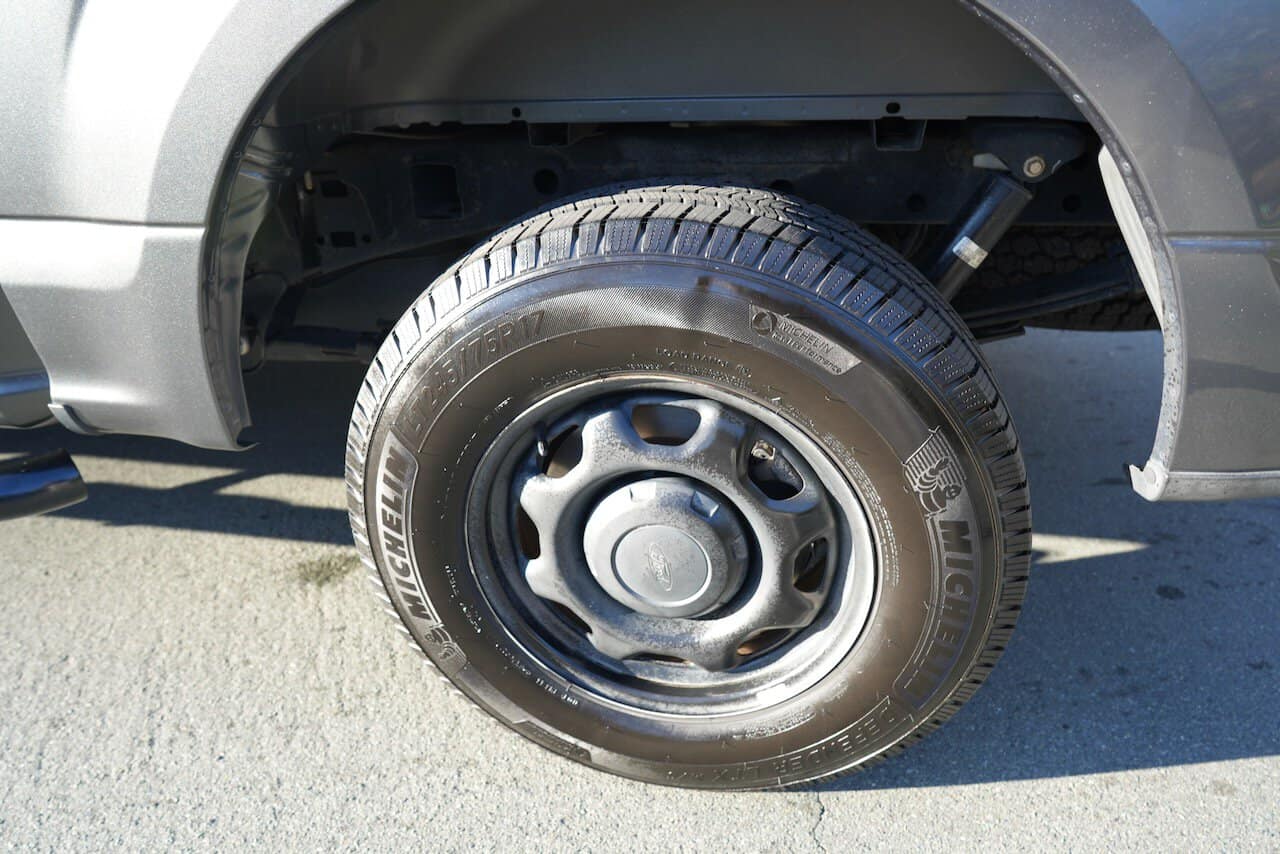
I’ve had many sets of BFGoodrich KO2 all-terrain tires, and they have performed well for me. I’d be comfortable putting the KO lineup on my shortlist again. The current KO3 is another option to investigate. My hands-on experience is with the KO2.
A June 2024 customer review on BFGoodrich’s KO3 page describes repeated balancing attempts and highway vibration on a Bronco. I would ask the installer how persistent vibration would be handled before ordering a set.
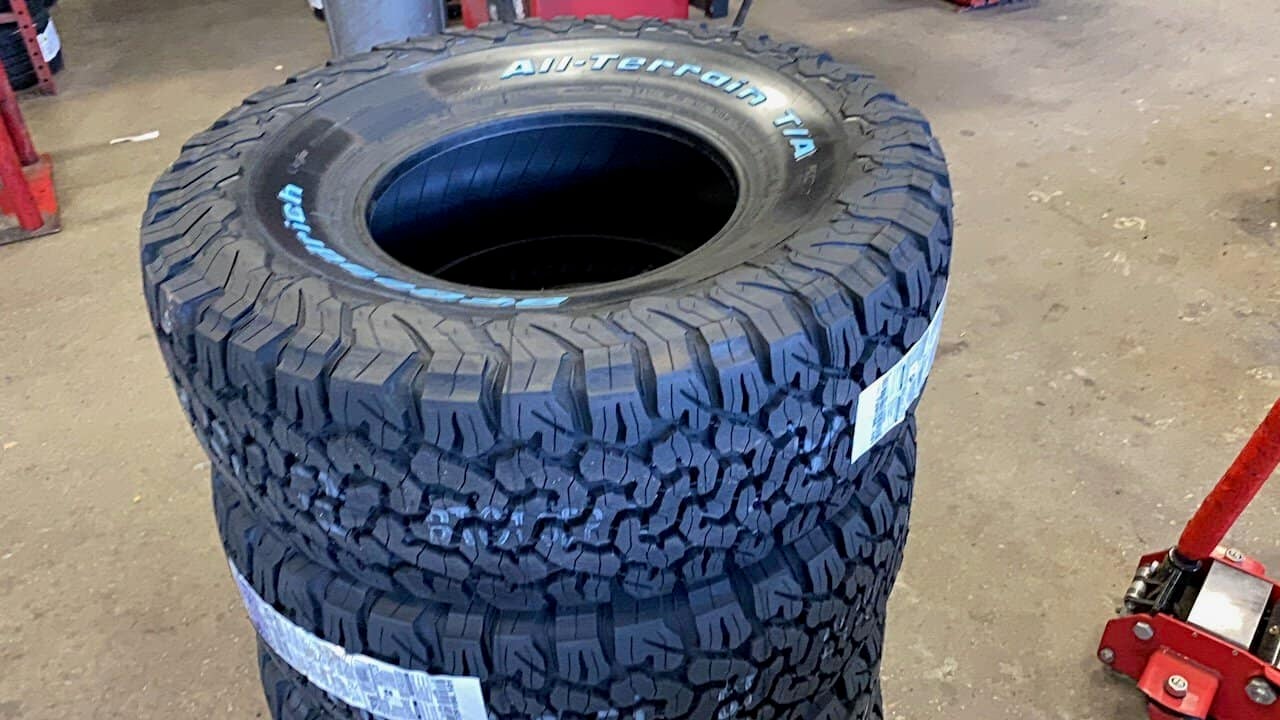
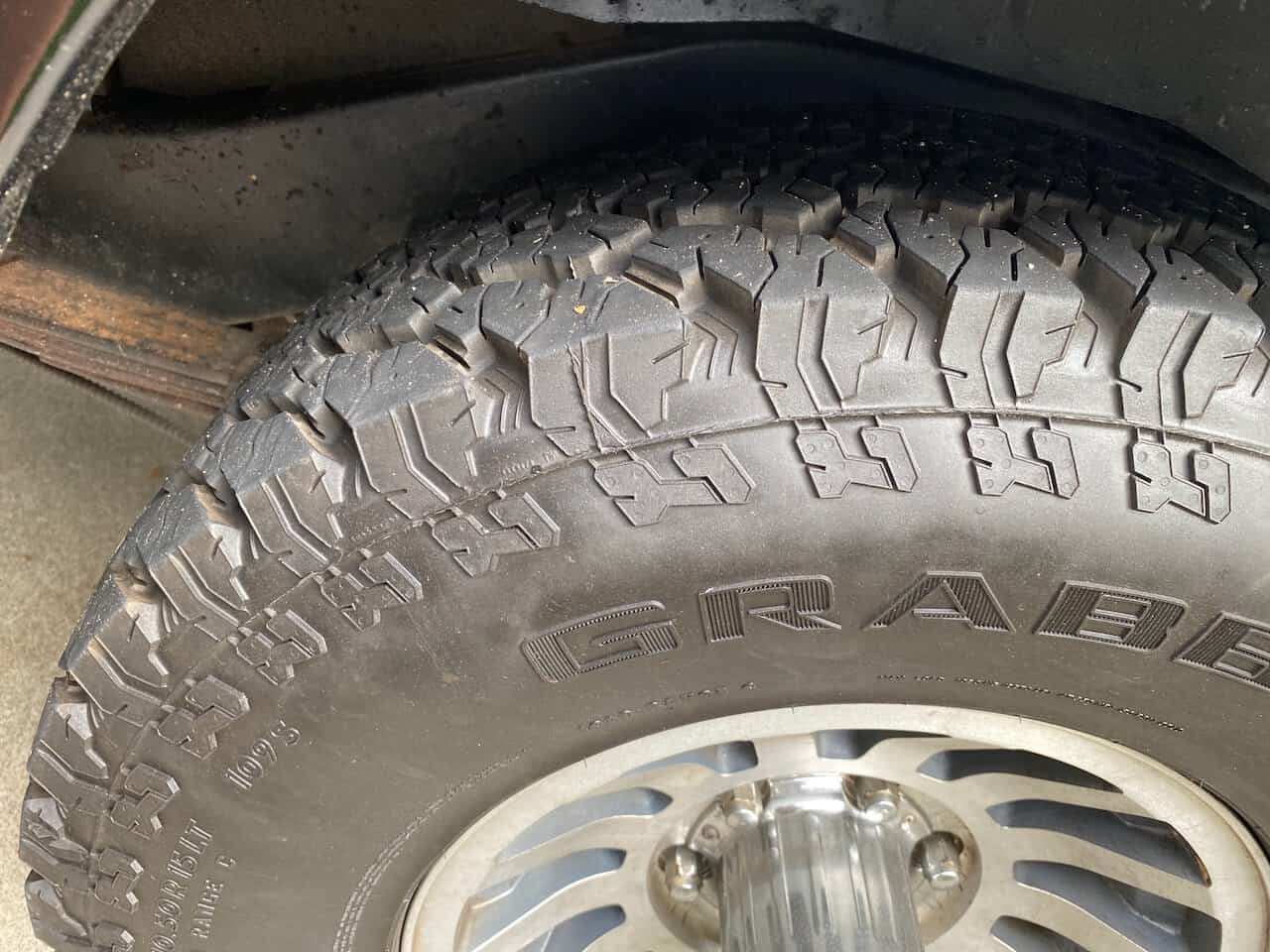
General Grabber belongs on my all-terrain shortlist
I’ve run General Grabber all-terrain tires on one of my classic Grand Wagoneers and was really pleased with them. If you told me you wanted an AT tire for your truck or SUV, they’d be on my shortlist.
Looking back, I wish I’d chosen Grabbers for the Sequoia over the Toyo Open Country AT3s I put on it. I liked the aggressive look and off-road ability of the Generals, and I’d happily consider another set.
Why I’d hesitate over Toyo Open Country AT3s
I put Toyo Open Country AT3s on my 2023 Toyota Sequoia, and I hated the noise and stiffness on the road. Toyo Open Country ATs have held up well on my coworker’s GMC Sierra 2500. I can understand another owner liking them. On my Sequoia, though, I wanted a more comfortable ride.
They might leave me with a different impression on a pickup. Before spending my money on another set, I’d want a ride in a comparable truck wearing them. Good reviews wouldn’t erase what bothered me on the Sequoia.
Maxxis Razr AT is the surprise on my shortlist
My cousin introduced me to Maxxis. He runs Razr mud-terrain tires on his 1999 Suburban 2500 for road trips, hunting, and camping. I chose Razr ATs for our 2011 Lexus GX 460 because I wanted larger, more aggressive tires on a vehicle used mostly on the road.
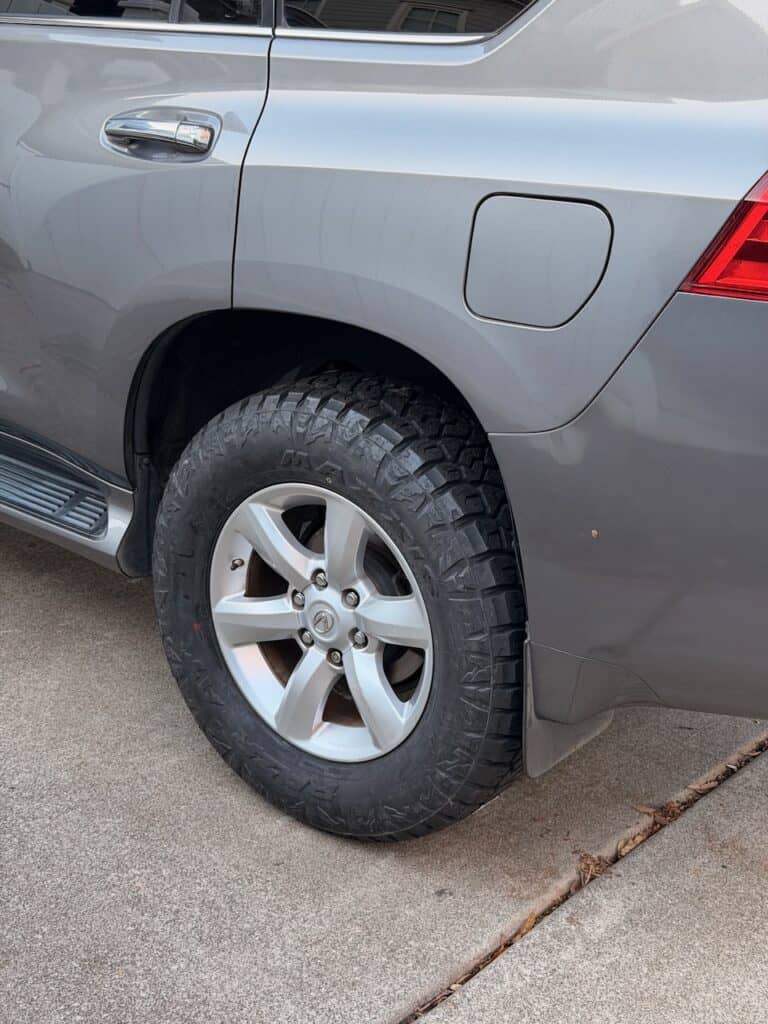
I put them on around the same time as the Toyos went on the Sequoia. The Maxxis tires felt so much smoother and quieter that it surprised me. The Lexus is a different vehicle from the Toyota, so I can’t give the tires all the credit. I can tell you I was much happier driving on the Maxxis set.
My daughter now has the GX at college, where it sees occasional around-town driving and long trips home for the holidays. I drove it for 18 hours on one road trip and came away impressed with the tires. We have about 7,000 miles on them as I write this, and so far, so good.
I’d consider Razr ATs again if I wanted the tougher look and was watching the budget. Compare installed prices where you live, and keep the mileage in mind. I’ve been pleased with them so far, with plenty of long-term wear still to see.
Six checks before you buy larger F-150 tires
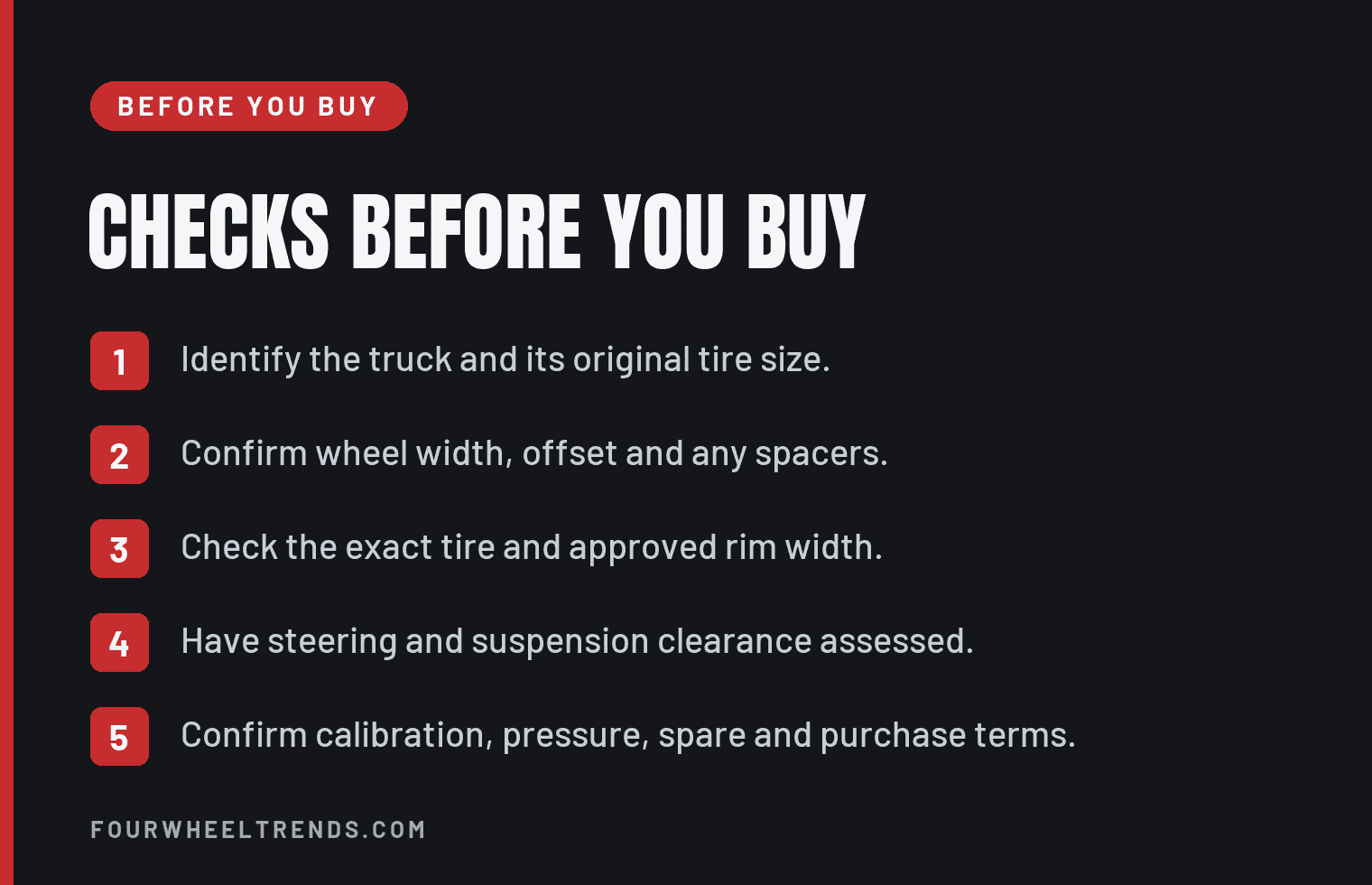
- Identify your truck. Record model year, 2WD or 4WD, trim, suspension equipment, and the original size on the tire label. On a used truck, have the suspension inspected for previous changes.
- Identify your wheels. Confirm diameter, width, and offset. Include any spacers in the fitment assessment.
- Specify the exact tire. Ask for the make, model, full size, load index, speed rating, published dimensions, and approved rim-width range.
- Agree on a clearance check. Have the installer assess both steering directions, forward and reverse, and suspension movement relevant to your driving. Flag towing, rough trails, and steep driveway entries.
- Plan calibration, pressure, and the spare. Confirm these before the truck leaves the shop.
- Get the purchase terms. Ask whether the shop will install the proposed non-factory size and what happens if it rubs. Include all necessary work in the quote.
If you were asking what I’d do with a daily driver, I’d compare a tire I liked in the original size with a slightly taller option. On factory 20-inch wheels, I’d take the 275/65R20 examples to a tire shop. The King Ranch owner shows why a 285/65R20 is also worth discussing, with the shop checking your truck before you spend the money.
That’s where I am with my own F-150. I like the idea of bigger tires, and I like how the truck drives now. I’d want a set that gives me the look without making me regret it on a long drive. If it takes extra parts to make that happen, I want to see the whole bill before deciding.
What tires are you running on your F-150, and would you choose them again? Leave a comment with your truck’s year, tire brand, model, and size. Let us know whether you’re on factory wheels and suspension or have changed anything, and whether you’ve had any rubbing.
I’d also love to hear your go-to tires and why you keep coming back to them. Is it the quiet ride, the look, how they handle off-road, or how long they’ve lasted? Your experience could help someone else decide what to put on their truck.
Sources
- Michelin: current Defender LTX M/S2 truck and SUV tire.
- BFGoodrich: current All-Terrain T/A KO3 and attributed customer review.
- Ford: 2025 F-150 owner’s manual, Tire Replacement Requirements.
- Ford: 2026 F-150 XLT factory wheels and tires, 2026 Tremor, and 2026 Raptor.
- F150Forum: 275/65R20 and 285/65R20 installations, page 2, November 2016, and page 3, King Ranch installation and follow-up, November 2019.
- F150Forum: stock-suspension Toyo AT2 report, May 2018.
- F150gen14: 2021 XLT stock-height KO2 installation, January 2022.
- F150Forum: stock-suspension Recon Grappler report and wheel clarification, December 2023.
- F150Forum: older-generation 17-inch tire discussion, November 2013.
- Nitto: Ridge Grappler dimensions and approved rim-width ranges.
- Tire Rack: wheel offset and wheel-width explanation.
- F150gen14: Toyo/spacer interference report, October 2025.
- BFGoodrich: size changes, calibration, load capacity, and inflation.
- F150gen14: modified 2021 Lariat owner’s driving impressions, September 2025.